When it comes to protecting and enhancing printed materials, choosing the right lamination method can make all the difference. Whether you’re producing banners, fine art, signage, or packaging, understanding the strengths of liquid and film coatings will help you make the best decision for your needs. In this guide, we’ll break down the benefits of each technique and introduce Marabu’s industry-leading clear coatings and equipment.
What is Liquid Lamination?
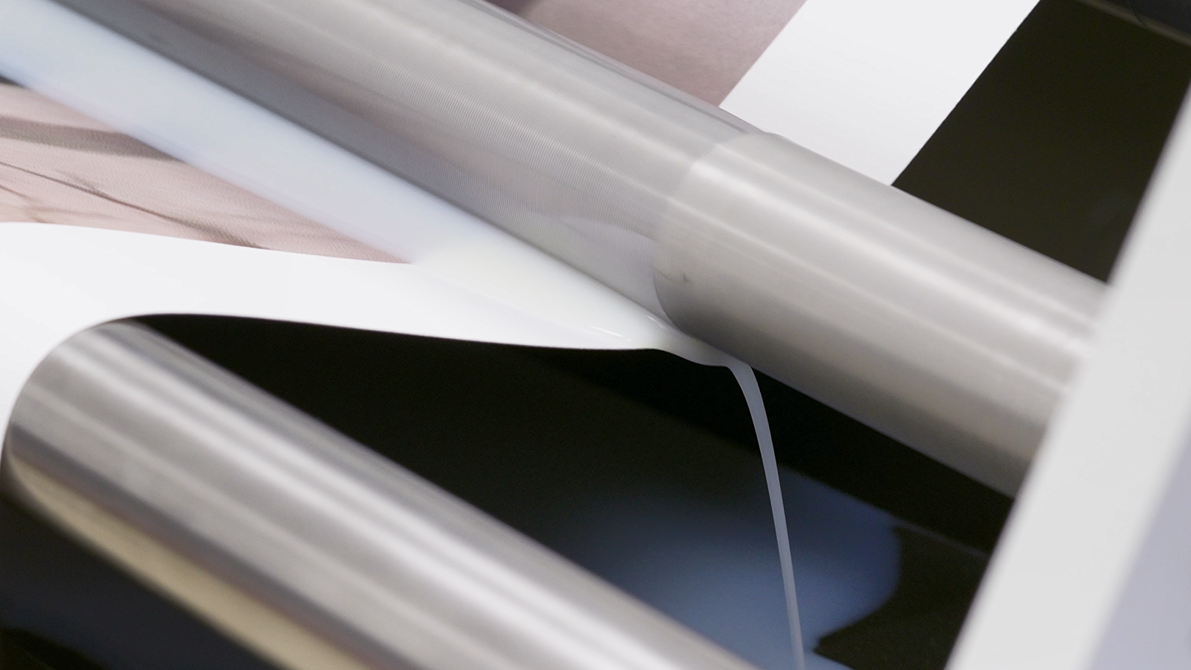
Also known as clear coatings, liquid laminates are a versatile and cost-effective way to protect and enhance printed surfaces.
They’re ideal for:
- Fine art and photographic prints
- Banners and billboards
- Awnings and outdoor signage
They shield your prints from:
- Moisture and humidity
- Abrasions and scratches
- Dirt, fingerprints, and chemicals
- UV rays and sun damage
This added protection helps maintain color vibrancy and extends the life of your prints—especially in outdoor environments.
In addition to enhancing durability, the liquid lamination process also makes the color of your ink stand out. This can help printers create products and advertisements that say what they need to say with undeniable visual flair.
Liquid laminate is easy to apply and doesn’t require any special equipment. In fact, it can be done by hand or with a spray gun if you don’t want to use a liquid laminator. Additional benefits include generally lower process and material costs (3-20 cents per square foot), consistent, reproducible quality, no time-intensive post-print cutting, and first-class, full-coverage results that make your materials tough enough to use in outdoor settings.
Film Lamination Explained
Lamination film has protective qualities of its own. Stains, spills, tears, wrinkles, fingerprints, and other contaminants that may cause wear and tear on printed surfaces can be held at bay with properly applied film laminate.
Like liquid, this enhances the appearance and longevity of the material in question. However, unlike liquid, this technique can be costly. There are waste and trimming factors to be accounted for and the film is far less flexible than liquid, creating issues with rigidity and making it more difficult to bond to UV outputs. The process is relatively straightforward and can be done with a roll laminator, a hot laminator.
When to Choose Liquid Laminate for Your Printing Projects

Before deciding on liquid laminate, think carefully about the materials you’re working with and the look you want to achieve. While film laminate—though more costly—remains the go-to choice for paper, cardboard, and foil packaging, liquid laminate offers far greater versatility. It can be tailored through a range of finishes and specialized formulations, including water-based, solvent-based, and UV-curable options developed by today’s advanced ink technologies.
Exploring Finishes
Liquid laminates come in a variety of finishes, each with its own character: gloss, semi-gloss, satin, and matte.
Semi-gloss & Satin: These finishes strike a balance between shine and softness, offering flexibility for projects that need both visual appeal and readability.
Gloss: Ideal for commercial print pieces like business cards and brochures, gloss delivers a sleek, reflective surface that enhances color vibrancy and conveys a polished, professional image.
Matte: Perfect for projects that call for sophistication and subtlety, matte adds depth and a smooth, elegant texture. It works beautifully on books, boxes, board games, and magazines, especially when displayed under direct lighting, since it minimizes glare.
Marabu Product Overview
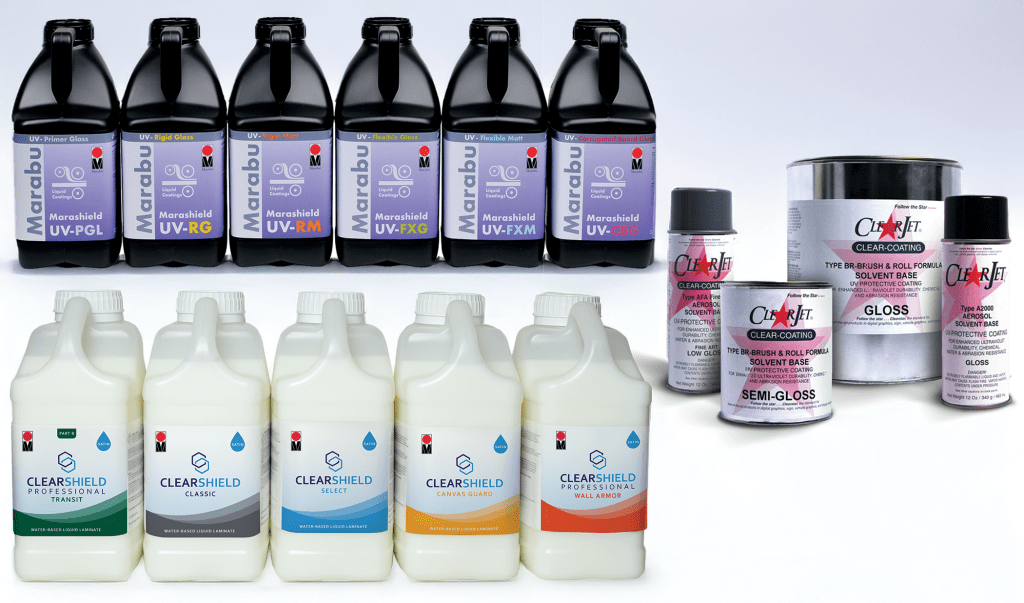
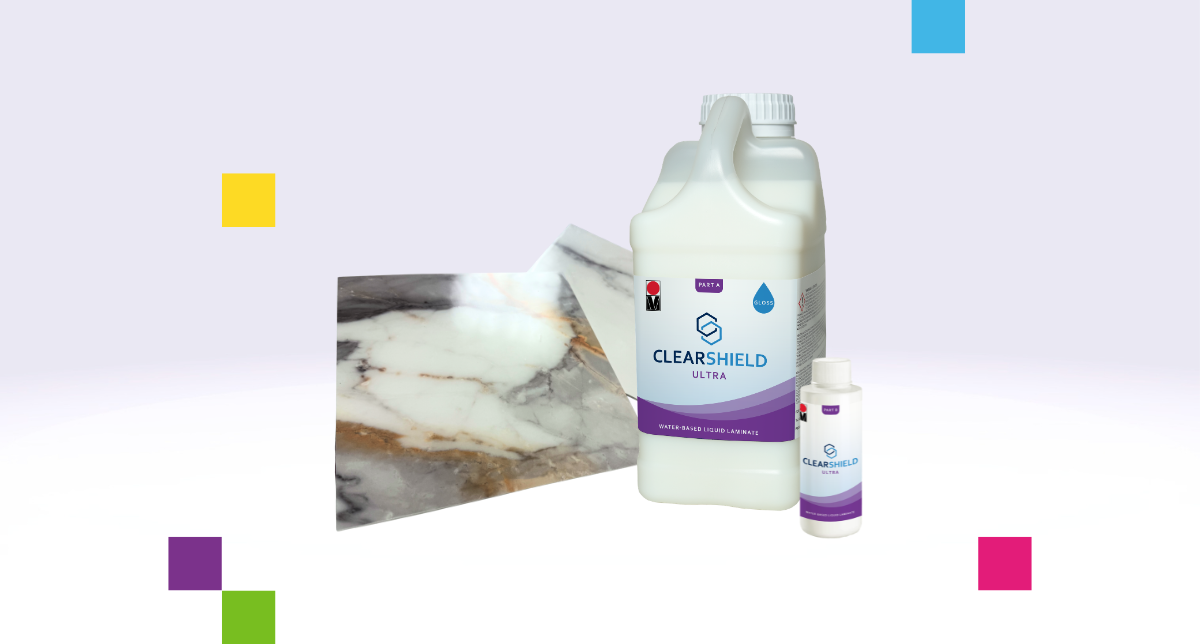
Marabu’s ClearShield® Liquid Laminate features UV light absorbers and light stabilizers and can be used for digital inkjet output, printed and airbrushed products, and more traditional signage. We offer a variety of coatings, all of which have been designed to protect inks from marring, UV exposure, water, and chemicals. Here’s what makes the different types useful for your upcoming printing projects:
Water-Based
ClearShield® is a premium liquid coating best suited for banners, wall coverings, digital prints, and a variety of other materials. On average, ClearShield® is 50% less expensive than film and can be applied to projects that exceed the size limits of a given machine. Offering more UV and abrasion protection than film, ClearShield® can be applied by hand and requires only one person to handle the application process. Choose ClearShield® to eliminate waste and to double the lifespan of your inks.
Solvent-Based
ClearJet® is applicable on both solvent-based and water-based inks, and we recommend using it with water-sensitive ink and media combinations, like fine art. By penetrating the canvas, this laminate prevents discoloration and adds a protective water-proof layer to your products and materials. ClearJet® even works on rigid substrate, chloroplast, and more.
UV-Curable
Five distinct formulations of Mara® Shield can be applied using roller-coating. From digital prints to interior design objects and even challenging substrates like glass, these liquid laminates make beautiful, long-lasting designs possible in a whole new way. If your project includes digital prints on rigid materials like plastic, wood, aluminum, cardboard, or corrugated board, our UV-curable liquid laminates are still an excellent choice.
Marabu’s Superior Liquid Laminate Offerings
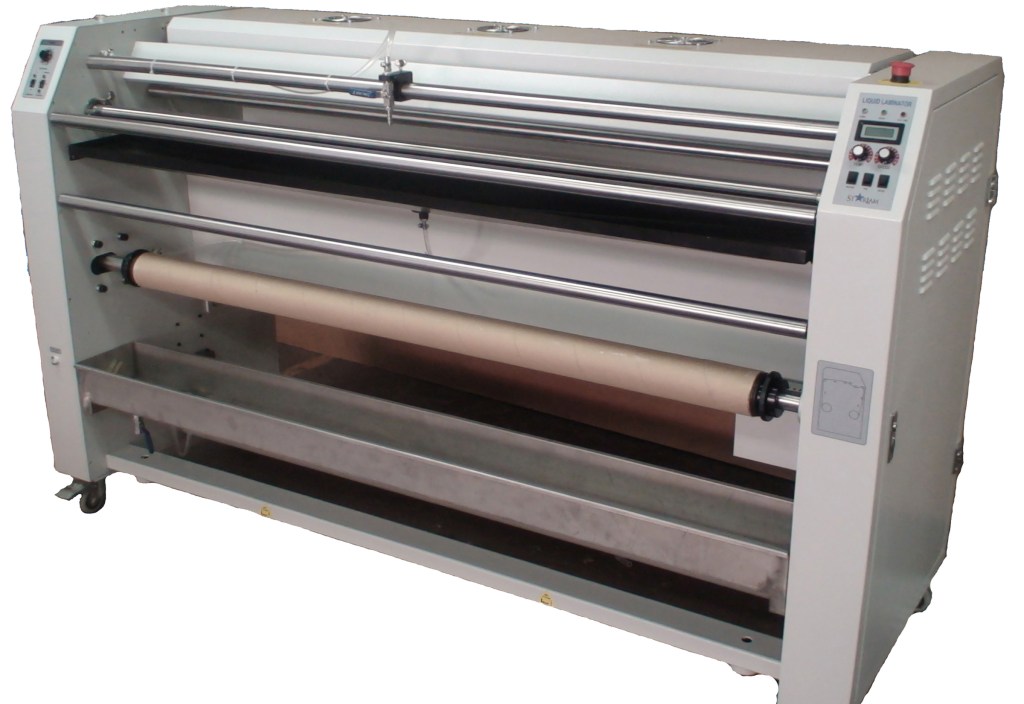
Find your perfect liquid coating solution with Marabu! Our clear coatings are specifically designed for each application, delivering spectacular quality to your projects time and time again. You can also explore equipment like our StarLam® 1600R Roll to Roll Liquid Laminator. Crafted with ClearShield® in mind, the StarLam® is an innovative and proven system that can be used for quick, easy coating of banners, backlit signs, trade show displays, and more.
Watch this video for pro tips to the perfect liquid lamination!
Contact us today to find a distributor of Marabu products near you.